The order Passeriformes contains over half the known bird species on the Earth. It is a wide ranging categorization, with over 140 families and 6,500 some identified species of birds. This many birds would seem to constitute a large number of the totality of birds discovered, and indeed, as previously stated, the order holds more than half of all discovered bird species. Taking, together, all those myriad forms, no two the same in form or function; evolution spreading its wings and exploring even those stranger corners of ecological niche. Even within the same type of bird, there is individuality. In Passeriformes alone there are crows, wrens, sparrows, thrush, magpies, more. A versatile mix, each a masterful design in their own respect, for their own purposes. All different.
Alike.
Different. Passeriformess knows he's different. Admittedly that sounds lame, even in his own head, but he thinks it's true. He flexes wings, wings that he's used to, and continues constructing his bar. Pass has been building this bar, for a long time now. It's large, imposing, and looms over the communal area that the rest of the server mills about from day to day. Its largeness is only incidental to its purpose as a communal area, a place of gathering and comradery, a mixing of people and personalities of all types. He's not saying he's different from everyone else, although to a certain extent that's true, just as it's true that nobody is the same person as anybody else but they’re all the same depending on how far up or down you go. He's different than he was. He's changed. He blinks, with eight eyes, and continues construction on his bar. It towers over the landscape, and he thinks it’d be a lot more practical if he could fly.
For hundreds of years, man has been sorting that different and varied life into boxes. Real or imagined, categorical in nature or constricting in nature, we have been exercising our dominion over those perceived lesser creatures as we wish. In ways they could not imagine. Nor do those ways have much, if any, direct effect on them. If you think on the topic, what difference would there have been in the genetic lineage of the spotted tanager if we had never decided to put it into the order Passeriformes. Or if we had never declared it a tanager, or had never decided to put all birds of a feather in one flock together. Were the entire scientific world to break down in the next hour, completely and totally, the natural world at large would scarcely notice, save for the greatly increased amount of room available with humanity's rapid demise in that instance. Some would go so far to argue language itself serves only to diminish the world around us for the sake of convenience, but I would argue convenience is worth the sacrifice. Science can be a force for good, a hand uplifting mankind, allowing us to reach greater and greater heights. It can also be the hand of a toddler, trying to pet a cat only to rip out a handful of fur.
Extant.
What bird Pass was before he died, exactly, is largely inconsequential. He knows, of course, but it’s not very important to him, both because he’s since changed drastically on that front and because it was never important to begin with. He finds that’s true for most people, no matter how you categorize them. The minutiae of identity is mostly just around for philosophers. He tells people he was a Gyrefalcon sometimes, if they ask, but of course that’s not a real bird. Even those aspiring ornithologists he meets think that he’s talking about the Gyrfalcon and he does nothing to disabuse them of that notion. Who’s to say he can’t invent his own species? They had never asked any other birds about it (or been able to, in fairness), but perhaps they would have opinions on the name of their species and how it’s been used. He doubts the chicken loves being a symbol of cowardice. There’s been nothing to suggest anybody else is a Gyrefalcon anyhow, and so he is the de facto expert of the species. He knows everything there is to know, of which there is little to know. Of course there is a lot to know, wingspan and habits and diet and capacity for emotion and lifespan and eye color and hair color and favorite color, but none of it useful except to file away and forget. He is also, technically, that last lonely endling before extinction, but what is any death except extinction? The distinction between the death of a species and the death of an individual is only numbers. The Gyrefalcon will live and die a mystery to those who never knew it.
Passeriformes and its constituent parts, due to its variety of member species, has been used in service of a great many symbols and metaphors and aesthetics. Animals are often irrevocably linked with themes and ideas built up in the common mind of humanity throughout years of history, often history unknown to those who unconsciously make the connection. The raven (and, often, the crow), for instance, is a recognizable classic of gothic fame. It’s featured in the titular poem “The Raven”, written by Edgar Allen Poe and published in 1845 to decent popularity but not financial viability. His eventually dark and miserable end is apt, for that's the tone of the majority of works featuring a notable raven or similar thematic stylings. The poem has maintained appeal among the wider public, but especially among people who appreciate similar things such as graveyards, bones, My Chemical Romance, and Victorian architecture. Edgar Allen Poe did not invent the association between ravens and the macabre, the mysterious and unexplained. The raven was also widespread as far back as Nordic mythology and imagery. Famously the raven was Odin’s spying bird, always watching, always listening and reporting back to Odin. The two named winged servants of Odin, Huginn and Muninn (roughly translating to Mind and Will), make frequent appearances in tales and poetry of the time. It was said they flew across the world daily, a singular effort of mind and willpower. Similarly to the raven the crow is commonly seen as a foul omen; a deathly portent. If someone is about to die in some form of media, it’s not unlikely to hear the caws of crows in the background, or to see them conspicuously line up on a telephone wire. Rarely, however, are they shown affecting the events they herald or bringing them to bear in any way. A crow is a passive observer to misery, and it cannot be said whether it follows death or death follows it.
Beginning.
The world was ending. In an instant, an instant that stretched far too long. No birds sung, no insects chittered, no leaves swayed in the wind. A blinding flash, the encroachment of a thousand stars onto the Earth. The world did not return to the void. He expected it would, bodily bracing for that sensory overload. Why? Instead the world puttered on, a sick and coughing thing with mites, unable to fly. Until the last mites died, and with it, the world as the mites knew it.
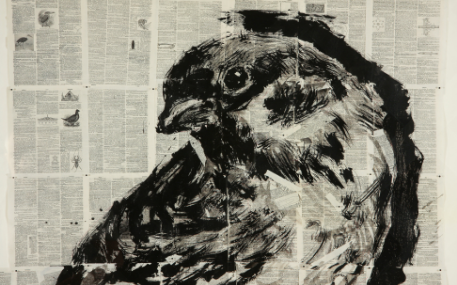
Thematically, aesthetically, the finch is a sacrifice. An omen of death, similar to the crow, but not in league with it. A death of innocence, perhaps, or a symbol of how the world chews you up and spits you out without a care. Used by miners (alongside, more famously, canaries) around the early 1900s to detect carbon monoxide leaks, finches died in their multitudes to preserve the lives of their human coworkers. They would die long before the men, in the case of a gas leak, alerting the miners to leave. The usage of finches as gas detectors has been picked up intermittently in tumultuous times since, as with their use in WW1 or the Tokyo gas attacks of 1995, but largely fallen out in favor of more modern, humane, and convenient methods. The finch since then has been largely overshadowed by the canary when the topic comes up, seen in turns of phrase such as “Canary in a coal mine”. The canary itself is a passerine bird as well, but I would argue still lacking in the face of the finches achievements. The finch is an important bird, scientifically, more so than any other (excepting perhaps those first birds that would kickstart the evolutionary chain itself). In the 1830s, Charles Darwin, a naturalist, discovered the Galápagos finches, which is a group consisting of 18 species all expressing noticeable variation in beak functionality depending on what they eat. This discovery led Charles Darwin towards the theory of evolution, which was evidently important. In truth, however, Darwin’s Finches are not true finches, and only the birds within the family Fringillidae are considered true finches. Many birds are called finches, when they are not true finches, including some sparrows, buntings or tanagers. Each of them are wholly distinct, separate things. None of them are finches. Yet they are held together by the glue of flawed perception.
Hunger.
Coming back to life hurts. Not as you’d expect. It hurts because there was nothing, and then something. He dies like the rest of the world, with less fear and loathing, and the abnormality is his return. Death is an absence of life, like dark is an absence of light or cold is an absence of heat. He dies and it is, for lack of a better explanation, like falling into a dreamless sleep. When he wakes, returning from ash, it is how he imagines a newborn enters the world. Fresh eyes, fresh ears, every sense burning raw and ragged. Like stepping onto an alien planet and breathing air which was not made for you but your lungs must nonetheless circulate. The returnal of life to one so devoid. Air rushing into a vacuum. It’s like nothing else, and it never dulls for his experience. He supposes it is a gift. Where throughout one's life things can feel familiar, unsurprising; can come with a sense of Deja Vu (with which he is quite familiar). His saving grace, both physically and not, is that perk of his species so envied by most. To burn, and rise from the ash. He supposes he is unique in that regard, as no other bird can do as he does. He finds, though, that they all fly the same sky and walk the same earth.
But Passeriformes is not the only order, as there exist many other orders with other varied and streamlined families and genera. Strigiformes, Anseriformes, Gruiformes, Falconiformes. 23 to 44 orders in total, depending on who you ask and how correct they are, but a great many orders. A great many birds within those orders. The crow, the shrike, the barn owl, the pigeon, the ostrich, the chicken, the peacock, the penguin, the gyrfalcon. Some flightless, some predatory, some prey, all birds. And all that is only considering the most modern face humanities endeavours have taken, ignoring those Greek or Roman or unknown paleolithic minds that sought to make sense of the world as we do. Evolution of course makes things that are not birds, predominantly so even, things that fly yet aren’t birds or crawl on many legs or swim with striking fins, but that is not the point of the work.
The Point.
Passeriformess is swimming in the ocean, and he loves it. Good thing, because he’s had to swim a lot throughout his lifetime and he’ll have to swim a lot more until he’s dead. To danger, from danger, as danger, with danger. Freedom of movement is the one shared tool of land, water and sky. Better to be sessile, to be a sponge, a plant? To watch the world pass him by, secure and unmoving? No. There’s nothing, nowhere, he’d rather be, land or sky or beyond. The sea is his home, and his comfort, and all he knows. Flying is for things with wings.
Passeriformess is flying. Not with wings of plumage and feathers but of cracked and leathery flesh, and he doesn’t know where he is. Nor who he is or what he is, beyond hungry. None of that is concerning to him; all his attention is on the prey running around beneath him. He can smell it, and it smells tired. Weak. Circling is more apt a word than flying, he would say were he of sound mind, and he swoops in for the kill. No use in waiting.
Passeriformess is waiting. He’s always uncomfortable in the light, be it sun or torch, and prefers the dark. Sometimes he’ll just sit and wait, moving only to strike whatever comes around the darkened corner of his cave. Usually his friends (looking for him), and he’ll jump out and scare them. Often a mob, and with eight eyes and incredible dark vision that’s not usually a problem. Sometimes, while he waits, he wonders what it would be like to fly with real wings or to swim with real fins, but for the most part he’s content with the cold dark of his cave. Everyone always wants what they can’t have.
Falcons, birds of prey of the genus Falco, are predatory birds. That is the basis for their classification as falcons, is their masterful, streamlined killing design. A natural perfection of violence, more perfect than any manmade attempt could aspire to. They come from, rather obviously, the order Falconiformes. Introduced at the same time in 1758, as a species of falcon in the newly minted genus, was the Gyrfalcon. As a species, the Gyrfalcon lives in much colder, isolated areas, where it hunts fish, small mammals and other birds. The species has been known, however, in cases of individual vagrancy, to traverse long distances away from their homes. The name Gyrfalcon comes from, going some layers back, either the Proto-Germanic girį̄; meaning “greed”, or the latin gȳrus for “circle” or “curved path”. The Gyrfalcon hunts by circling as it searches for prey, much like some larger bats, and then closing in. It is the largest falcon in the world. Notable falcons, larger even than the Gyrfalcon, would be Freddie and Freida Falcon, the mascots of Bowling Green State University in Bowling Green, Ohio. Falcons were chosen as the mascot for the school by Ivan Lake, a local sports writer, because they are commonly powerful and highly trained, which is in line with the popular perception of falcons as sleek, destructive killing machines. This is why, rather than actual falcons, popular falcon references are often vehicles such as the Millenium Falcon or the F-16 Fighting Falcon jet produced initially by General Dynamics and then Lockheed Martin. But those are, inevitably, much better at killing than their avian namesakes, statistically.
Real Bird.
He flew into the glass. Unbelievable. Why did he ever try to build with something he can’t see, he wonders. And to make it look like such an inviting spot to land. He’s lucky, really, he could’ve died. Like slow motion, the air shattering around him, light refracting itself and becoming a million tiny cuts across his body, his face. Thankfully he didn’t, and now survives to clean up the glass shards all over the floor, fix that window, and try to hide his embarrassing mishap from the other members. He doesn’t need that story haunting him forever. It’s the last time he drinks and flies anyway, that's for sure. Well, he thinks, probably not.
Doves, from the family Columbidae, are near opposites of the falcon and are a bird I see no reason to expound upon greatly. Their thematic importance is evident to anybody with sense. It is only funny, or rather sad, to remark upon how they are seen in comparison to their closely related cousin the pigeon (also in the family Columbidae). One, a symbol of freedom, innocence, purity, beauty: One compared to rats and tossed to the ground, the ersatz dove. Yet both are very similar, all the same. The carrier pigeon, once its use was discovered by science, was much more useful to man than any dove known throughout history, but the second technology eclipsed its use it was thrown to the side, left to roam the streets and pick up scraps. A better fate than some other pigeons still, the passenger pigeon case in point. Such is nature, human or otherwise, pointed inward or outward. But, such is nature's nature to contain multitudes; nothing is ever black and white. There was a monumental effort to save the passenger pigeon, and when it failed there was great sadness. And did some miners not make every effort to save their avian companions, with specialized boxes that would seal the chamber and release oxygen when the canary was poisoned, reviving it? The bald eagle, the pink pigeon, whooping cranes and the trumpeter swan are a few of the birds that man has stopped the clock on. But still, many fall dead each year, and will continue to do so.
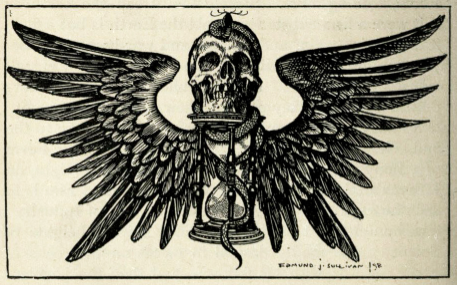
Extinction.
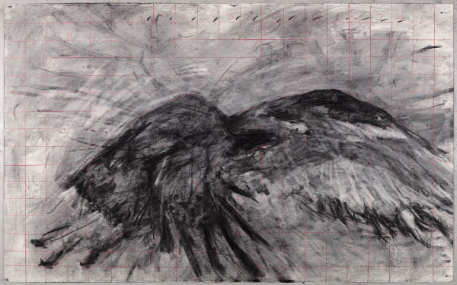
Fire was exaltation. An elevation, a cleansing, a purification. Alternatively, a monster. Destruction, hunger, death. But, for him, in the moment, it was something to see. Everybody else was moving on, bigger and brighter things, and his buddy Morbidskies was gonna kill himself. There’s not enough time to go into the whys and hows, but safe to say there was no talking him out of it. Pass is just watching at first, solidarity or curiosity or something else deep down inside, but, God, the sight of it. The sight of it. It isn’t a stoic affair, and bugs run in droves over his shoes and into the dark forest, the failures popping and crackling on the pyre like fireworks. The firelight is harsh and illuminating in the pitch black and it allows him no comfort, no dark curtain for death to hide from sight. It is a miserable, uncomfortable, and deeply disturbing affair. He steps closer. The smell of burnt skin and hair mingles with the crisp night air. One step. The crackle of flame. Another. The gleam of unmelted gold. He thinks the fire must not be hot enough to melt it. Drawing closer and closer, until the heat burns at his skin and smoke is getting in his eyes. Closer still he steps and steps until flames are singing the tips of his shoes. Closer, still. A part of him long cut off is calling out. Closer. He wades through ash. Closer. Pain. Closer. An unfurling of wings. Rebirth.
I have exhibited a few birds, very lightly and generically, to make the point that evolution, and the more understandable human concepts of categorization and segmentation, attempts to unify the disparate fledgling life that roams our Earth while, at the same time, creating the individuality it serves to minimize. Often, society will be tempted to make broad sweeping statements about any one animal or species or type of person, and those will be wrong. In 99% of cases, reducing a mass of individuals to simply a mass doesn’t work. You reduce the larger category of birds into smaller categories, orders like Falconiformes; reduce them further to families like Falconidae, go down to genus or subgenus and then species. From the species level, you can sink lower still to the level of the individual. Each falcon, each wren; all have their own lives and behaviors and quirks. We would have no concept of those things as unique or vastly different were it not for the advent of deep and specific categories of life being agreed upon, and then argued upon ad nauseum. The same is true for humans, largely. We don’t have so many related species, not living anyway, but we try to categorize the same. We can make broad sweeping statements about any minor specificity of a person. Tall or short, ginger or blonde. But sinking down to the minute level of the individual you can see rich inner lives play out uncorrelated to any one trait, with nobody else any the wiser to their happening. Of course, science would be correct that you can make generalizations. There are things that are true, largely, about birds, or people, or both. Any two lives compared, or four or six, will have innumerable similarities, coincidence building on coincidence, choice upon choice. One person can be many things throughout a lifespan, can be many people, many ideas. A bird, a fish, a bug, anything. There’s bound to be overlap. It’s the differences in those lives that matter, and what you do with them.
Overlap.
Who are you?
Pass is building a bar. He’s done it before; he’ll do it again. Jungle, Mangrove, Birch, Spruce, Honeycomb, Sandstone, Gold. A million blocks, for a million lifetimes.
All of that to say, always get freakier. It’s what nature intends and man fears. I hope you enjoyed my rambling and discordant Wikipedia recital that was only barely obfuscating its purpose as a vehicle for semi-coherent drabbles.